- SIR GANGA RAM HOSPITAL, Old Rajinder Nagar, Rajinder Nagar, Delhi, 110060
- Mon - Sat : 9:00 AM - 6:00 PM


Gallery Posts






A peripheral pseudoaneurysm develops when blood leaks through an injured or weakened blood vessel wall and collects in the surrounding tissue while remaining connected to the artery. It may occur after a vascular procedure, an injury, or other damage to a blood vessel.
Consultant, Sir Ganga Ram Hospital
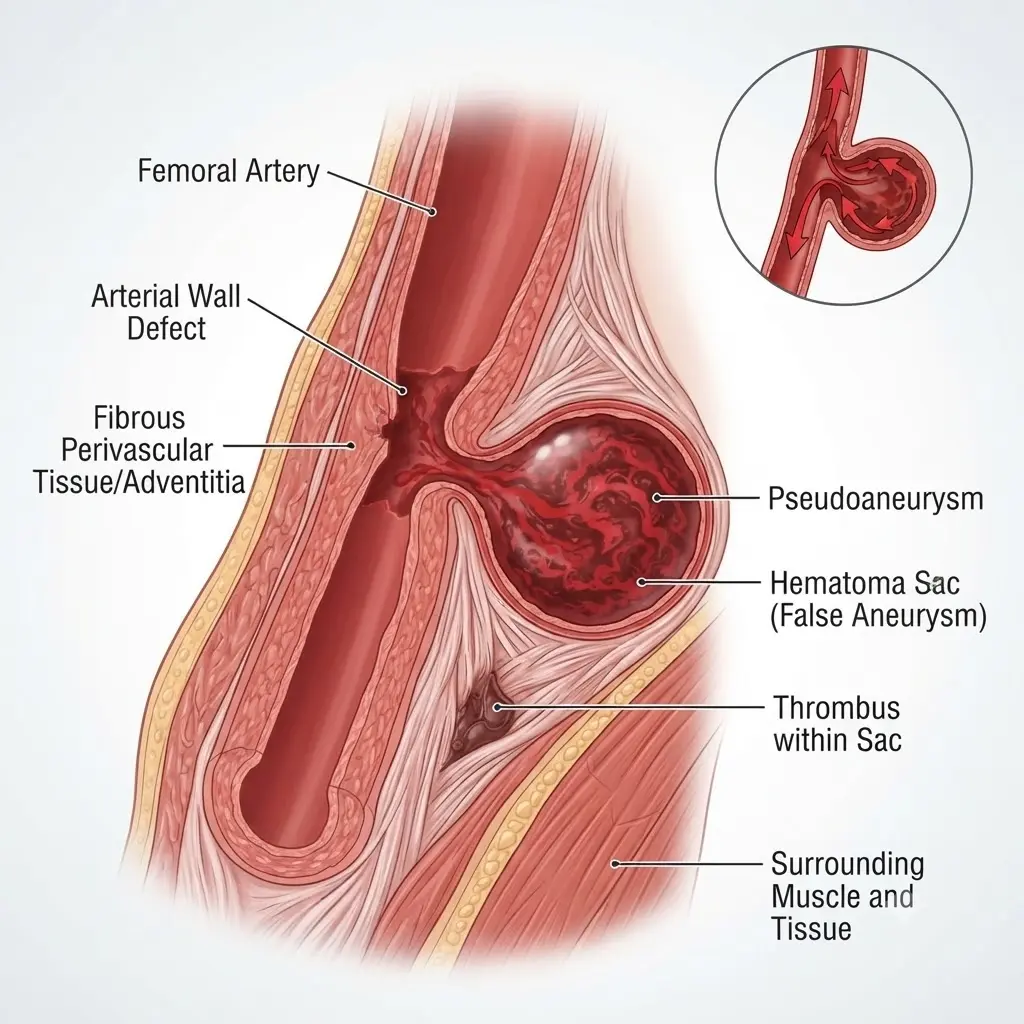
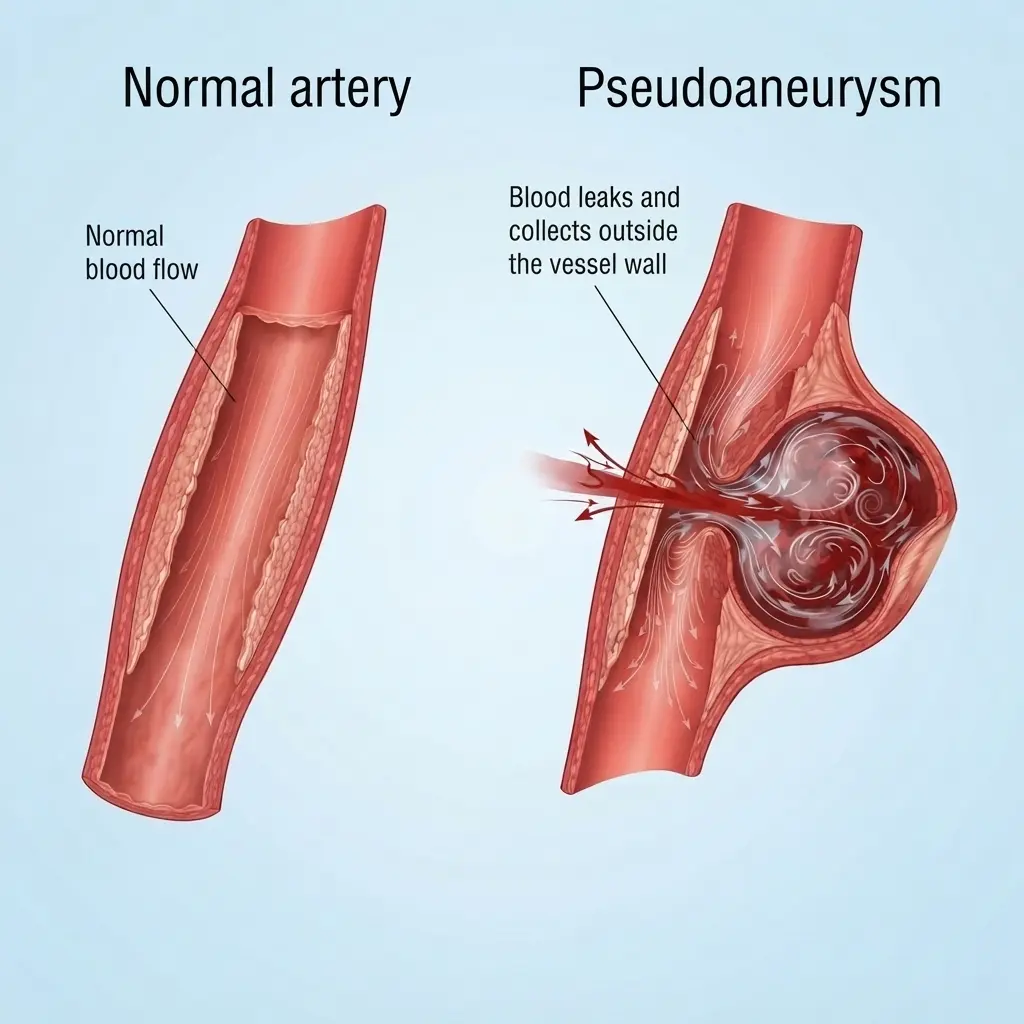
A pseudoaneurysm, sometimes called a false aneurysm, occurs when blood escapes through a defect in an artery wall and forms a contained collection outside the normal vessel layers. The collection remains connected to the artery, allowing blood to flow into it with each heartbeat.Peripheral pseudoaneurysms can develop in arteries supplying the arms, legs, or other parts of the body. They may occur after catheter-based procedures, vascular surgery, accidental injury, or trauma. Some develop near a previous arterial access site.
Peripheral pseudoaneurysm embolization is a minimally invasive procedure used to block blood flow into a pseudoaneurysm by targeting the responsible vessel or vessels. The objective is to prevent further filling of the collection while preserving circulation to the surrounding tissues whenever possible.
Under imaging guidance, an interventional specialist identifies the pseudoaneurysm and its connection to the artery. A catheter may be introduced through a blood vessel to deliver an appropriate embolic material, such as coils or another agent, depending on the anatomy and clinical situation.
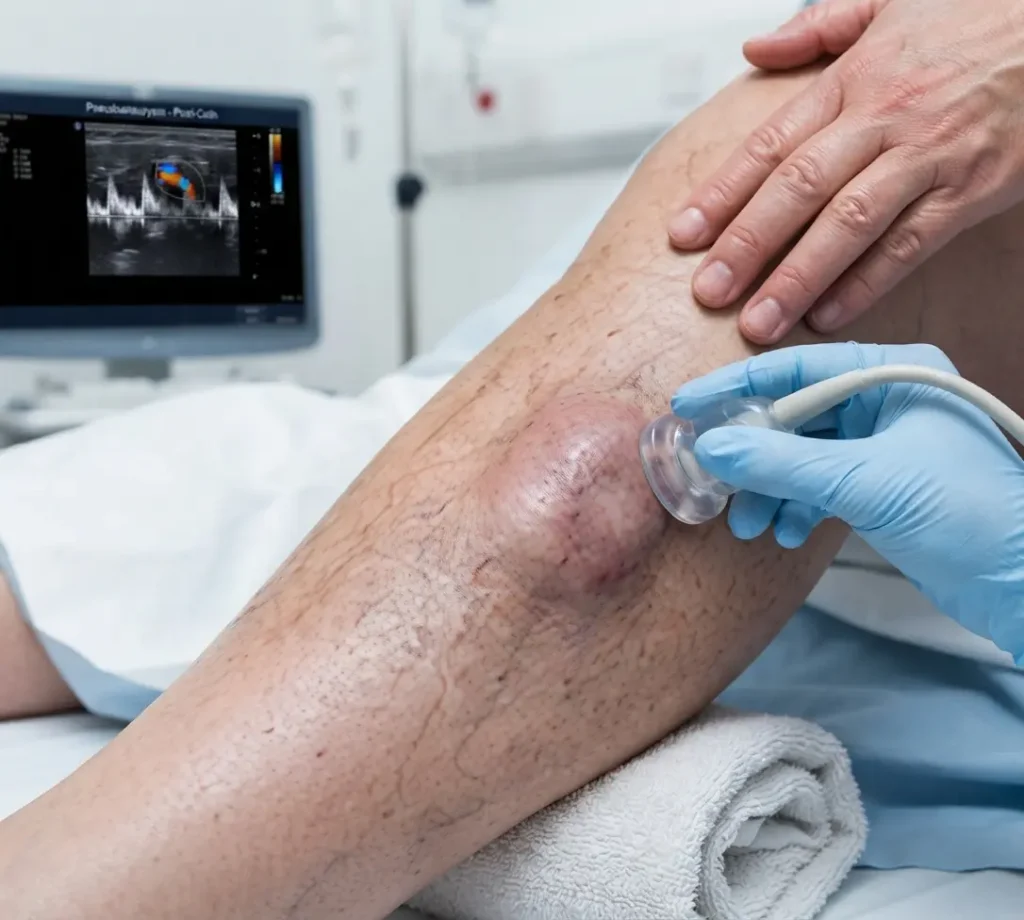
A vascular specialist may recommend further evaluation or treatment for patients with:
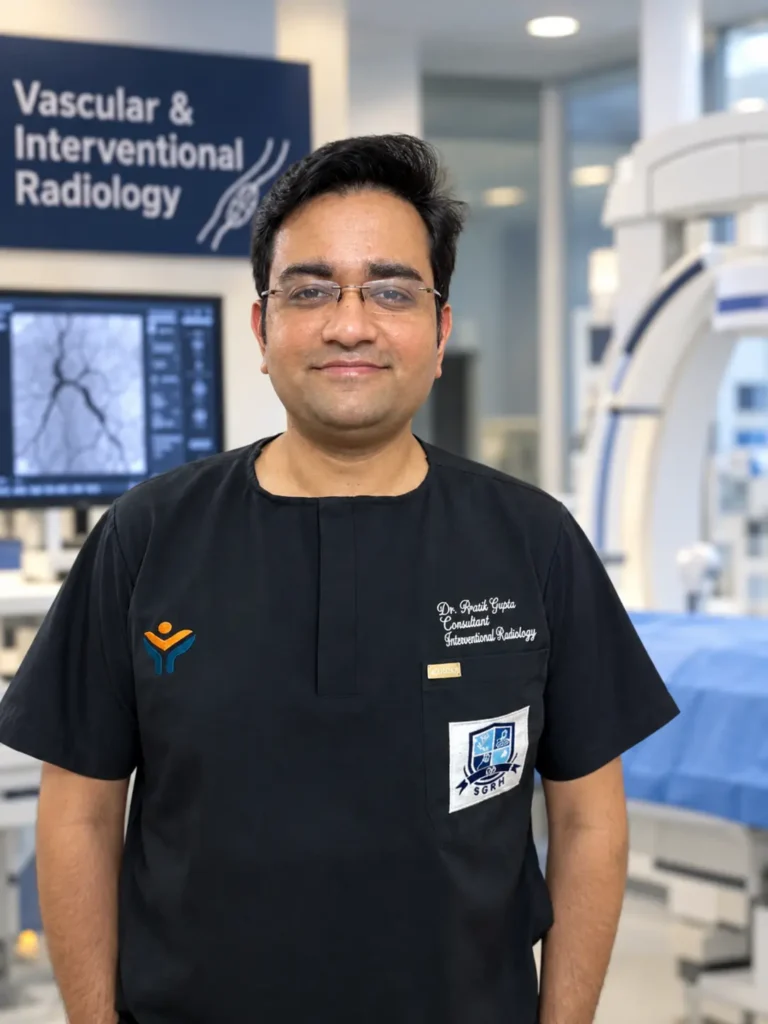
Dr. Anadi Gupta, MD, FVIR, EBIR, is a Consultant at Sir Ganga Ram Hospital with a focus on vascular and endovascular interventions.His areas of practice include peripheral pseudoaneurysm embolization, vascular malformation embolization and sclerotherapy, peripheral arterial disease angioplasty and stenting, DVT thrombectomy and catheter-directed thrombolysis, central venous angioplasty and stenting, and dialysis access interventions.
Consult Dr. Anadi Gupta at Sir Ganga Ram Hospital to understand your diagnosis and explore suitable treatment options, including image-guided embolization when appropriate.