ADVANCED VASCULAR & ENDOVASCULAR INTERVENTIONS

Vascular Malformation Embolization & Sclerotherapy

Targeted, Minimally Invasive Treatment for Abnormal Blood Vessels

Vascular malformations are abnormalities in the development of blood vessels that may affect the skin, soft tissues, muscles, or deeper structures of the body. Depending on their type and location, they may cause swelling, pain, discoloration, or functional difficulties.

Dr. Anadi Gupta, MD, FVIR, EBIR

Consultant, Sir Ganga Ram Hospital

Vascular Malformation Embolization & Sclerotherapy
Vascular Malformation

Understanding Vascular Malformations

What are vascular malformations?

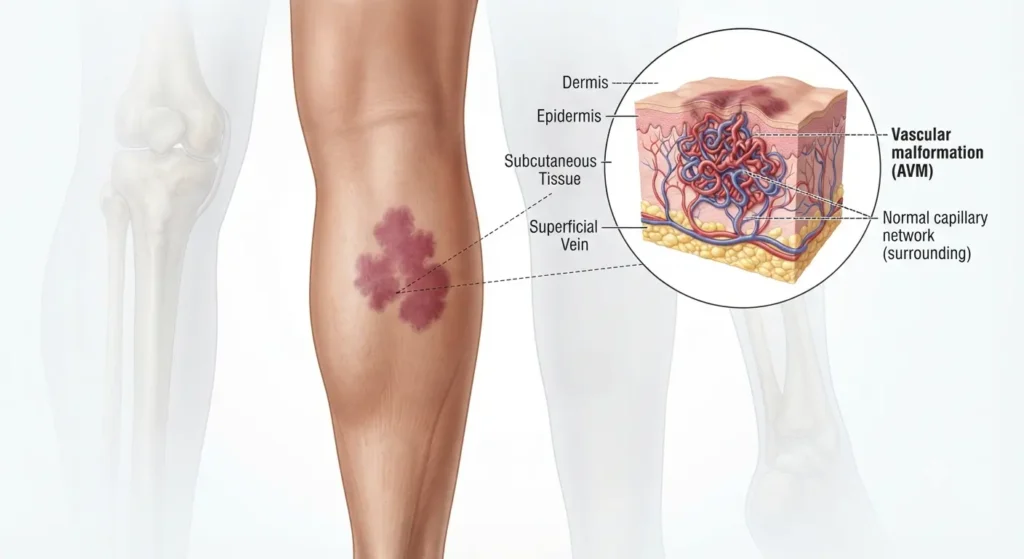
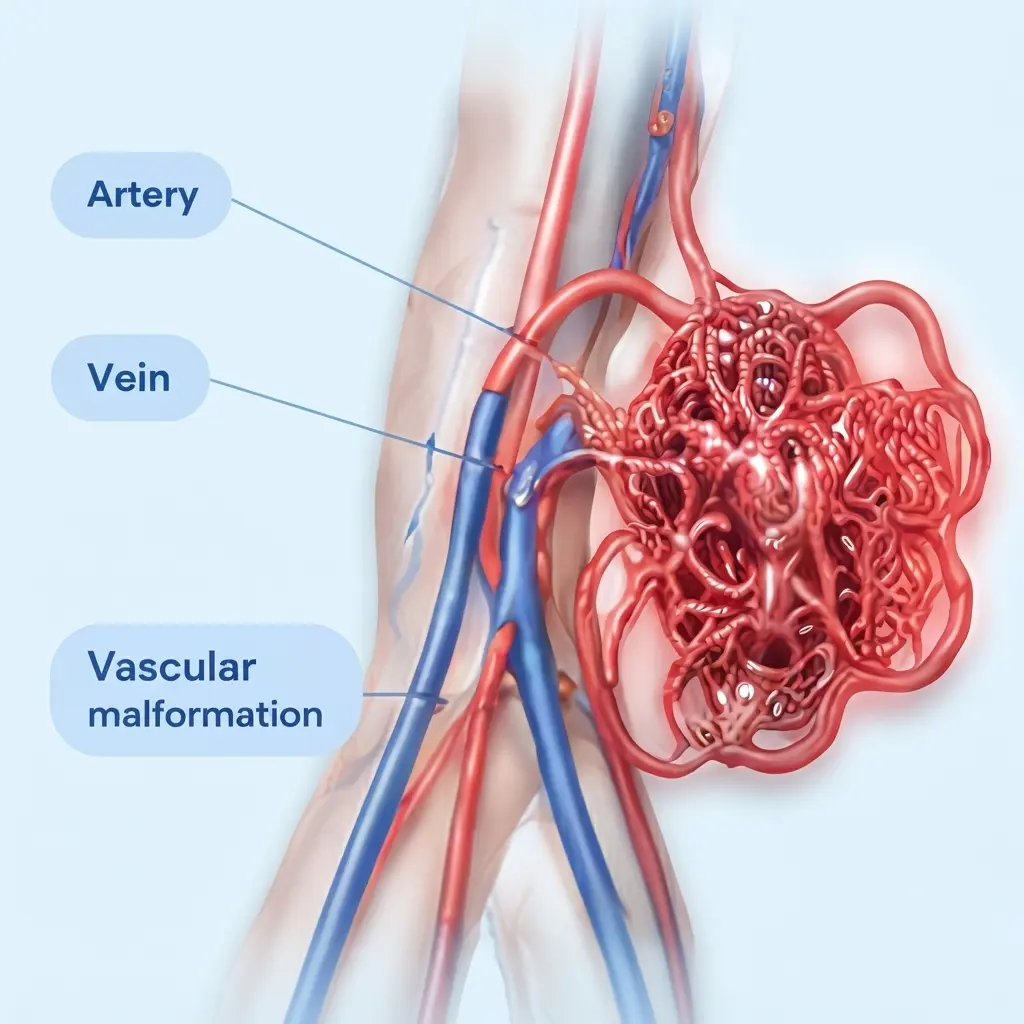
Vascular malformations are structural abnormalities of blood vessels that develop before birth, although they may not become noticeable until childhood or adulthood. They can involve veins, arteries, lymphatic vessels, or a combination of vessel types.Some malformations remain small and cause few symptoms, while others may enlarge over time or become more noticeable during puberty, pregnancy, or other periods of hormonal change. Depending on their location and characteristics, they may cause visible discoloration, swelling, pain, bleeding, or pressure on nearby structures.Common types include venous malformations, lymphatic malformations, arteriovenous malformations (AVMs), and combined vascular malformations.

Common Problems

Who may benefit from treatment?

Is Vascular Malformation Treatment Right for You?

A specialist assessment may be recommended for patients with:
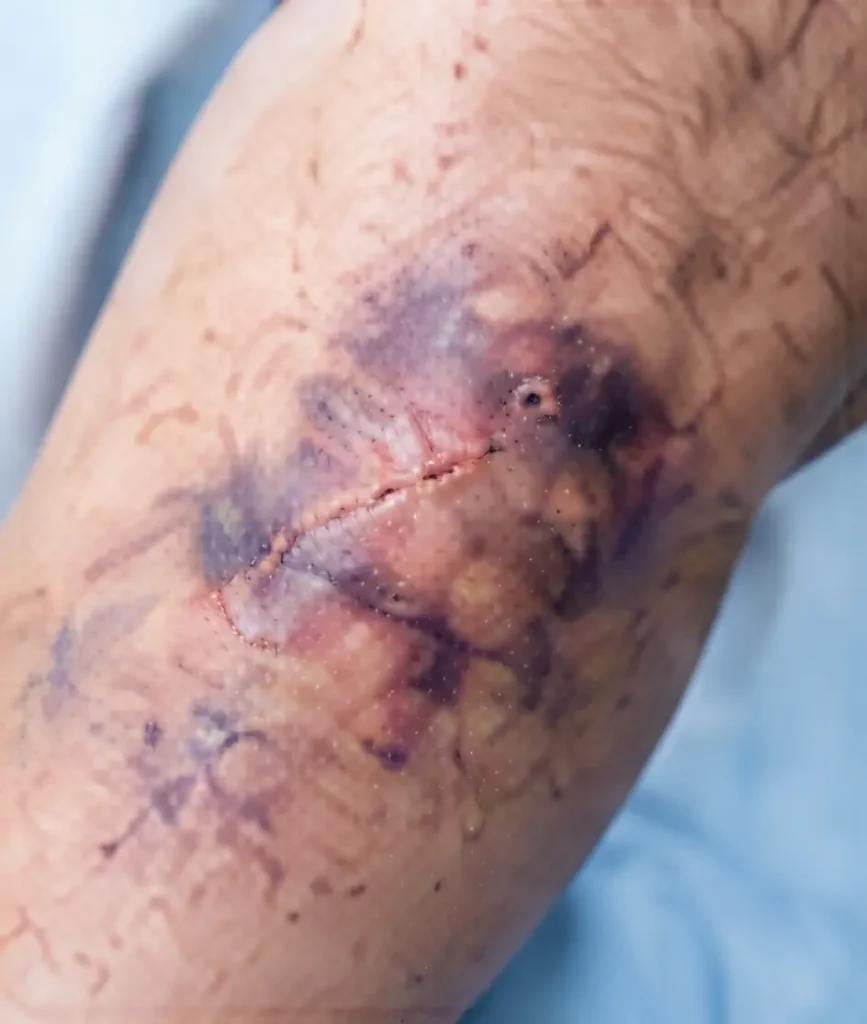
Common Signs and Symptoms

What are embolization and sclerotherapy?

Minimally Invasive Treatment Options

Embolization and sclerotherapy are image-guided procedures used to treat selected vascular malformations. They aim to reduce abnormal blood flow or close the affected vascular spaces, helping manage symptoms and limit complications.

Vascular Malformation Embolization

Embolization involves guiding a thin catheter or needle to the abnormal blood vessels and delivering specialized materials to block targeted vessels. Depending on the malformation, these materials may include coils, medical adhesives, or other embolic agents. It is commonly considered for selected high-flow lesions, including some arteriovenous malformations, where controlling abnormal blood flow is an important part of treatment.

Sclerotherapy

Sclerotherapy involves injecting a medicine called a sclerosant directly into the abnormal vascular spaces. The medicine irritates the inner lining of the targeted vessels, causing them to close gradually. It is commonly used for selected low-flow malformations, particularly venous and lymphatic malformations.

Combined or Staged Treatment

Some complex malformations require more than one procedure or a combination of treatment approaches. Embolization, sclerotherapy, surgery, or other specialist treatments may be considered as part of an individualized plan. The appropriate technique depends on the malformation's flow characteristics, location, size, symptoms, and relationship to nearby organs, nerves, and other structures.

  • May reduce symptoms such as pain, swelling, or discomfort caused by selected vascular malformations.
  • Uses image guidance to target abnormal vascular channels or spaces.
  • Can offer a minimally invasive alternative to open surgery for selected lesions.
  • May help manage recurrent bleeding or other complications in appropriately selected cases.
  • Can be incorporated into a staged treatment plan for complex vascular malformations.
  • Temporary pain, swelling, bruising, or inflammation around the treated area.
  • Bleeding or infection at the access or injection site.
  • Skin irritation, ulceration, or tissue injury.
  • Injury to nearby nerves or other structures, depending on the location.
  • Unintended blockage of normal blood vessels or damage to surrounding tissues.
  • Blood clot formation or other circulation-related complications.
  • Contrast-related reactions or kidney complications in susceptible patients.

How is the procedure performed?

The Vascular Malformation Treatment Process

Consultation and Assessment

Dr. Anadi Gupta reviews your symptoms, medical history, previous treatment, and the location and appearance of the malformation.

Diagnostic Imaging

Doppler ultrasound and MRI may be used to assess the lesion's size, extent, and blood flow characteristics. Additional imaging may be required for complex or high-flow malformations.

Personalized Treatment Planning

The specialist determines whether embolization, sclerotherapy, a combination of procedures, or another treatment approach is appropriate. The expected benefits, possible risks, and alternatives are discussed.

Image-Guided Treatment

For embolization, a catheter may be guided through a blood vessel to the target area, where an embolic agent is delivered. For sclerotherapy, a needle is placed directly into the abnormal vascular spaces under imaging guidance, and a sclerosant is injected.

Post-Procedure Monitoring

After treatment, the medical team monitors the patient for discomfort, swelling, bleeding, and other potential complications. Some patients may require observation in hospital, depending on the procedure and the extent of the lesion.

Follow-Up and Further Treatment

Follow-up helps assess changes in symptoms and the response of the malformation. Complex lesions may require multiple treatment sessions, repeat imaging, or a combination of therapies.

1

Why consult Dr. Anadi Gupta?

Specialized Vascular & Endovascular Care

Dr. Anadi Gupta, MD, FVIR, EBIR, is a Consultant at Sir Ganga Ram Hospital with a focus on vascular and endovascular interventions.His areas of practice include vascular malformation embolization and sclerotherapy, peripheral arterial angioplasty and stenting, DVT thrombectomy and catheter-directed thrombolysis, IVC filter insertion and retrieval, central venous angioplasty and stenting, varicose vein treatment, and dialysis access interventions.

ADVANCED VASCULAR & ENDOVASCULAR CARE

Looking for Treatment for a Vascular Malformation?

Get your condition assessed and explore suitable treatment options with Dr. Anadi Gupta, Consultant at Sir Ganga Ram Hospital. An individualized evaluation can help determine whether embolization, sclerotherapy, or another approach may be appropriate.

Frequently Asked Questions

Vascular Malformation Embolization & Sclerotherapy

What is a vascular malformation?

A vascular malformation is an abnormal development of blood vessels that may involve veins, arteries, lymphatic vessels, or a combination of these. It may cause visible skin changes, swelling, pain, or other symptoms, depending on its type and location.

Embolization uses specialized materials to block targeted abnormal vessels, often through a catheter. Sclerotherapy involves injecting a medicine into abnormal vascular spaces to make them close. The choice depends on the type and blood flow characteristics of the malformation.

Discomfort varies according to the lesion and treatment. Local anesthesia, sedation, or general anesthesia may be used depending on the procedure. Temporary pain and swelling can occur afterward.

Some lesions respond very well to treatment, while others may shrink or become less symptomatic without disappearing completely. Complex malformations may require multiple procedures and ongoing monitoring.

Some malformations can be treated in one session, while larger or more complex lesions may need several sessions. The treatment plan depends on the type, size, location, and response to earlier treatment.

Recovery depends on the procedure and the location and extent of the malformation. Temporary swelling or discomfort may occur, and some patients require a period of observation. Your treating team will provide specific aftercare instructions.

No. Some malformations can be monitored if they are not causing symptoms or complications. Treatment is considered based on symptoms, growth, bleeding risk, functional impact, and imaging findings.