ADVANCED VASCULAR & ENDOVASCULAR TREATMENT

Peripheral Arterial Thrombolysis & Thrombectomy

Restoring Blood Flow When Arteries Become Blocked

A sudden blood clot in an artery can interrupt blood supply to an arm or leg and threaten the health of the affected limb. Peripheral arterial thrombolysis and thrombectomy are specialized, image-guided treatments that may help restore circulation in selected patients.

Dr. Anadi Gupta, MD, FVIR, EBIR

Consultant, Sir Ganga Ram Hospital

Peripheral Arterial Disease (PAD) Angioplasty & Stenting
Peripheral Arterial Disease (PAD)

UNDERSTANDING ARTERIAL BLOOD CLOTS

What is Peripheral Arterial Disease (PAD) ?

Peripheral Arterial Disease, commonly called PAD, is a circulatory condition in which arteries that carry blood from the heart to the legs become narrowed or blocked. Reduced blood flow can cause leg pain while walking, slow-healing wounds, and, in severe cases, tissue damage.
PAD is often caused by atherosclerosis, where fatty deposits build up in the arteries. Early diagnosis and appropriate treatment are important to protect limb health and reduce the risk of complications.

Key Symptoms

IF YOU NOTICE THESE SIGNS

When is PAD Treatment Recommended?

PAD angioplasty and stenting may be considered for patients with significant leg pain, non-healing wounds, or reduced blood flow that affects daily activities.A vascular specialist will assess your condition and determine the most appropriate treatment approach.

PAD Treatment
Minimally Invasive Treatment

WHAT ARE PAD ANGIOPLASTY AND STENTING?

Minimally Invasive Treatment to Improve Blood Flow

Angioplasty involves inflating a small balloon inside the narrowed artery to widen it,while a stent may be placeds to keep the artery open. This image-guided procedure helps restore bleciad flow and relieve symptoms.
How is the procedure performed?

Peripheral Arterial Thrombolysis & Thrombectomy

Emergency Assessment

The medical team evaluates symptoms, the onset of pain, skin temperature and colour, pulses, sensation, and movement. Urgent assessment helps determine whether the limb is threatened.

Diagnostic Investigations

Doppler ultrasound, CT angiography, catheter angiography, and blood tests may be used to identify the blockage and assess circulation. The investigations selected depend on the urgency and clinical condition.

Treatment Planning

The specialist determines whether thrombolysis, thrombectomy, surgery, or another revascularization technique offers the most appropriate approach. Medication history, bleeding risk, and the underlying cause of the blockage are considered.

Image-Guided Treatment

When a catheter-based procedure is appropriate, a catheter is introduced through a blood vessel and guided to the blockage using imaging. The clot may be removed using a thrombectomy device or treated with clot-dissolving medication. In some cases, additional angioplasty or stenting may be required.

Monitoring

Blood flow, limb function, access-site bleeding, and other potential complications are monitored. Patients receiving thrombolytic medication may require close monitoring and repeat investigations.

Recovery and Prevention

After treatment, the medical team develops a plan to address the underlying cause of the clot. This may include prescribed antithrombotic medication, management of cardiovascular risk factors, and follow-up vascular assessment.

  • Restoration or improvement of blood flow to the affected limb.
  • Removal or breakdown of an obstructing blood clot.
  • Potential to limit further tissue damage when treatment is delivered in time.
  • A catheter-based treatment option for selected arterial blockages.
  • An opportunity to address underlying arterial narrowing during the same treatment episode when indicated.
  • Bleeding at the catheter access site or elsewhere in the body.
  • Serious bleeding, including intracranial bleeding, with thrombolytic medication.
  • Injury to the artery or damage to the blood vessel wall.
  • Distal embolization, where clot material travels into smaller arteries.
  • Recurrent clot formation or incomplete restoration of blood flow.
  • Contrast-related reactions or kidney complications in susceptible patients.
1

WHY CONSULT DR. ANADI GUPTA?

Specialized Vascular & Endovascular Care

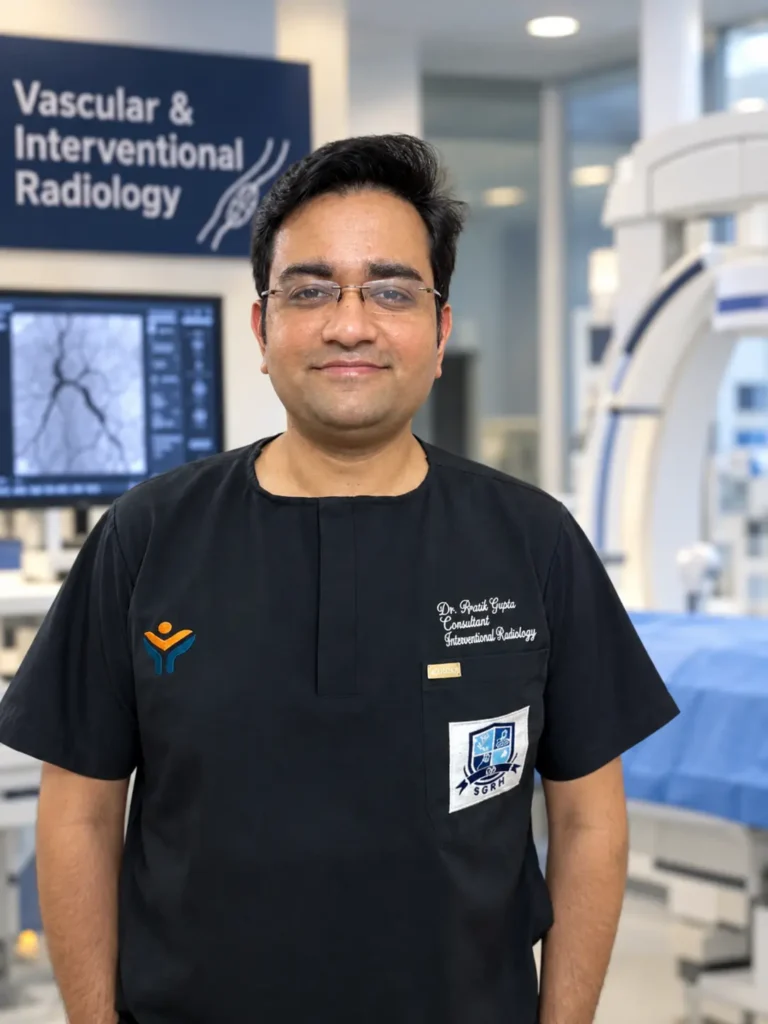
Dr. Anadi Gupta, MD, FVIR, EBIR, is a Consultant at Sir Ganga Ram Hospital with a focus on vascular and endovascular interventions.His areas of practice include peripheral arterial disease angioplasty and stenting, peripheral arterial thrombolysis and thrombectomy, DVT thrombectomy and catheter-directed thrombolysis, central venous angioplasty and stenting, IVC filter insertion and retrieval, and dialysis access interventions.

ADVANCED VASCULAR CARE

Sudden Limb Pain or Suspected Arterial Blockage?

Peripheral arterial blockages may require urgent treatment. Dr. Anadi Gupta provides vascular and endovascular care, with treatment selected according to the patient's condition and clinical needs.

Frequently Asked Questions

Peripheral Arterial Thrombolysis & Thrombectomy

Is peripheral arterial thrombosis a medical emergency?

A sudden arterial blockage that reduces blood flow to an arm or leg can be a medical emergency. Acute limb ischemia requires immediate assessment because delays may cause permanent tissue damage or limb loss.

Thrombolysis uses medication to dissolve a blood clot, while thrombectomy removes the clot using a catheter-based device or another technique. The appropriate treatment depends on the patient's condition and the characteristics of the blockage.

Catheter-based thrombectomy is generally minimally invasive and uses a small vascular access point. However, open surgery may be needed in certain cases depending on the location of the blockage, the severity of ischemia, and the urgency of treatment.

Catheter-directed thrombolysis may require medication infusion over several hours or longer, with close monitoring and repeat assessment. Thrombectomy duration varies with the complexity of the blockage and the technique used.

Some patients have an underlying narrowed artery that contributed to the clot. Angioplasty or stenting may be considered after clot treatment if clinically appropriate, but it is not necessary in every case.

Yes. Recurrence is possible, particularly when the underlying cause remains. Follow-up, prescribed medication, and management of contributing conditions are important for reducing future risk.

Seek emergency medical care immediately. These symptoms may indicate acute limb ischemia, and waiting for a routine appointment can delay limb-saving treatment.