ADVANCED VASCULAR & ENDOVASCULAR TREATMENT

Peripheral Arterial Disease (PAD) Angioplasty & Stenting

Restore blood flow and take steps toward better vascular health with advanced, minimally invasive treatment options.Peripheral Arterial Disease (PAD) occurs when arteries supplying blood to the legs become narrowed or blocked, reducing circulation. In suitable patients, angioplasty and stenting can help improve blood flow without conventional open surgery.

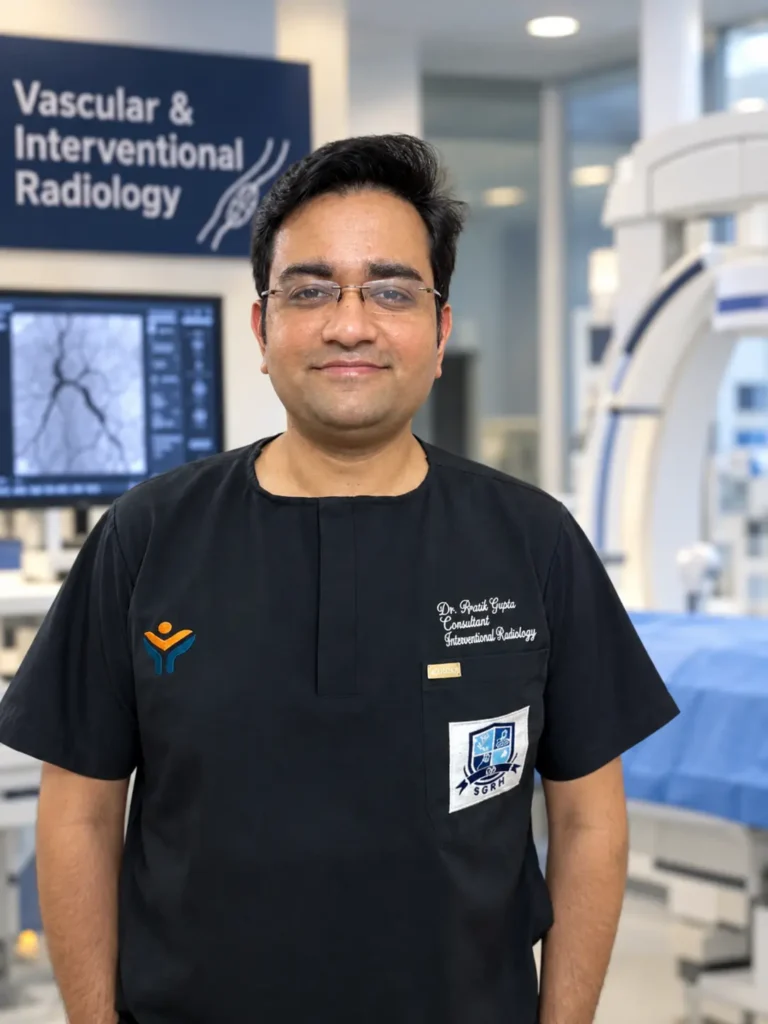
Dr. Anadi Gupta, MD, FVIR, EBIR

Consultant, Sir Ganga Ram Hospital

Peripheral Arterial Disease (PAD) Angioplasty & Stenting
Peripheral Arterial Disease (PAD)

UNDERSTANDING PERIPHERAL ARTERIAL DISEASE

What is Peripheral Arterial Disease (PAD)

Peripheral Arterial Disease, commonly called PAD, is a circulatory condition in which arteries that carry blood from the heart to the legs become narrowed or blocked. This is usually due to atherosclerosis, the buildup of fatty depositsinside artery walls.
Reduced blood flow can cause leg pain while walking, slow-healing wounds, and in severe cases, tissue damage. Early diagnosis and treatment can help protect limb health and reduce the risk of complications.

Key Symptoms

IF YOU NOTICE THESE SIGNS

When is PAD Treatment Recommended?

PAD angioplasty and stenting may be considered for patients with significant leg pain, non-healing wounds, or reduced blood flow that affects daily activities.A vascular specialist will assess your condition and determine the most appropriate treatment approach.

PAD Treatment
Minimally Invasive Treatment

WHAT ARE PAD ANGIOPLASTY AND STENTING?

Minimally Invasive Treatment to Improve Blood Flow

Angioplasty involves inflating a small balloon inside the narrowed artery to widen it,while a stent may be placeds to keep the artery open. This image-guided procedure helps restore bleciad flow and relieve symptoms.
How is the procedure performed?

The PAD Angioplasty & Stenting Process

Consultation and Assessment

Dr. Anadi Gupta reviews symptoms, medical history, medications, and risk factors such as diabetes, smoking, high blood pressure, and high cholesterol.

Vascular Investigations

Tests may include an ankle-brachial index (ABI), Doppler ultrasound, CT angiography, or other investigations to identify the location and severity of arterial narrowing.

Personalized Treatment Planning

The specialist discusses suitable treatment options, including medical management, exercise therapy, angioplasty, stenting, or surgery when appropriate.

Image-Guided Angioplasty

Under appropriate anesthesia or sedation, a catheter is introduced through a suitable artery access point. Using imaging guidance, a balloon is positioned across the narrowed area and inflated to improve the artery's diameter.

Stent Placement, If Needed

A stent may be placed if additional support is needed to keep the artery open. The result is assessed using imaging before the procedure is completed.

Recovery and Follow-Up

The patient is monitored after the procedure. The care plan may include prescribed antiplatelet medication, cholesterol management, smoking cessation, foot care, walking or exercise therapy, and follow-up assessment.

  • Improved blood flow through narrowed or blocked arteries.
  • Reduced walking-related leg pain in some patients.
  • Support for wound healing when inadequate circulation is a contributing factor.
  • A minimally invasive alternative to open surgery for suitable arterial blockages.
  • Potential to help preserve the limb in selected patients with limb-threatening ischemia.
  • Bruising, bleeding, or injury at the catheter access site.
  • Damage to the artery or formation of a blood clot.
  • Contrast-related reactions or kidney complications in susceptible patients.
  • Temporary or persistent blockage of blood flow during or after treatment.
  • Restenosis, where the treated artery narrows again.
  • Rarely, serious complications that may require additional treatment or surgery.
1

WHY CONSULT DR. ANADI GUPTA?

Specialized Vascular & Endovascular Care

Dr. Anadi Gupta, MD, FVIR, EBIR, is a Consultant at Sir Ganga Ram Hospital with a focus on vascular and endovascular interventions.His areas of practice include peripheral arterial disease angioplasty and stenting, peripheral arterial thrombolysis and thrombectomy, DVT thrombectomy and catheter-directed thrombolysis, central venous angioplasty and stenting, IVC filter insertion and retrieval, and dialysis access interventions.

ADVANCED VASCULAR CARE

Sudden Limb Pain or Suspected Arterial Blockage?

Peripheral arterial blockages may require urgent treatment. Dr. Anadi Gupta provides vascular and endovascular care, with treatment selected according to the patient's condition and clinical needs.

Frequently Asked Questions

Peripheral Arterial Disease (PAD) Angioplasty & Stenting

Can Peripheral Arterial Disease be treated without surgery?

Yes. Many patients can be managed with medication, risk-factor control, smoking cessation, and supervised exercise. Angioplasty or stenting may be considered when symptoms remain limiting or when limb-threatening ischemia requires revascularization.

Angioplasty is generally a minimally invasive, catheter-based procedure performed through a small access point rather than a large surgical incision. The approach, anesthesia, and recovery depend on the individual case.

No. Some arterial blockages can be treated with balloon angioplasty alone. A stent may be used when the artery needs additional support, depending on the anatomy and procedure findings.

Recovery varies according to the procedure, access site, extent of disease, and overall health. The treating team will advise when normal activities can be resumed and whether further rehabilitation is needed.

Yes. The treated artery can narrow again, and atherosclerosis can continue to affect other arteries. Medication, exercise, smoking cessation, and control of diabetes, blood pressure, and cholesterol remain important.

Severe PAD can progress to chronic limb-threatening ischemia, causing non-healing wounds, tissue damage, and sometimes amputation. Early assessment and appropriate treatment can help reduce the risk of serious complications.

Sudden severe leg pain, a cold or pale foot, new numbness, weakness, or difficulty moving the limb may indicate acute limb ischemia. Seek emergency medical care immediately.