ADVANCED VASCULAR & ENDOVASCULAR INTERVENTIONS

Central Venous Angioplasty & Stenting

Improving Blood Flow Through Blocked or Narrowed Veins

Central veins carry blood from the arms, head, and upper body back to the heart. When these veins become narrowed or blocked, blood flow can be restricted, causing swelling, discomfort, and circulation problems.Central venous angioplasty and stenting are minimally invasive, image-guided procedures that may help restore blood flow through affected veins.

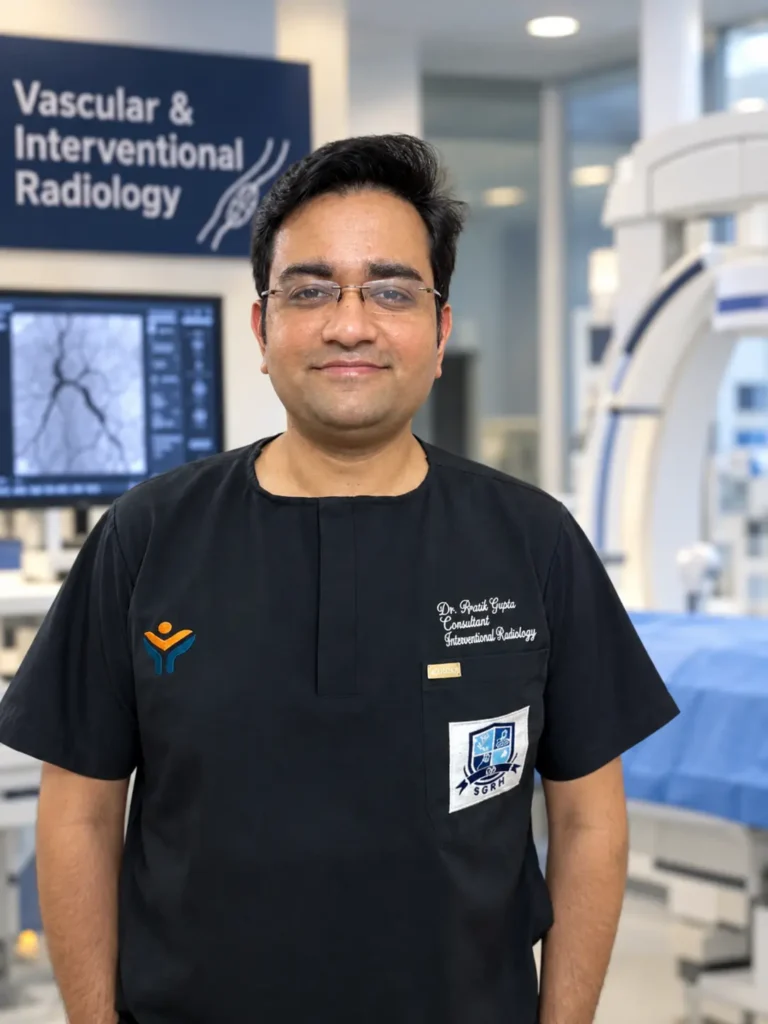
Dr. Anadi Gupta, MD, FVIR, EBIR

Consultant, Sir Ganga Ram Hospital

Central Venous Angioplasty & Stenting
Central Venous Obstruction

Understanding Central Vein Narrowing and Blockage

What is central venous obstruction?

Central venous obstruction occurs when a major vein becomes narrowed or blocked, making it difficult for blood to return to the heart. These veins include the central veins in the chest and the veins that drain blood from the arms and upper body.The condition may develop due to previous central venous catheter placement, long-term dialysis access, blood clots, external compression, or changes in the vein wall. Patients receiving hemodialysis may develop central venous narrowing after repeated catheter use, which can affect the function of their dialysis access.

Key Symptoms

Minimally Invasive Treatment to Restore Venous Flow

What are central venous angioplasty and stenting?

Central Venous Angioplasty

Angioplasty is a catheter-based procedure used to widen a narrowed vein. A thin catheter with a small balloon is guided through the blood vessels to the affected area using imaging guidance. The balloon is inflated to enlarge the narrowed section and improve blood flow.

Central Venous Stenting

In some cases, a stent—a small expandable mesh tube—is placed inside the vein to help keep it open. Stenting may be considered when the narrowing is severe, when the vein recoils after angioplasty, or when the clinical situation suggests that additional support may improve the result.

How is the procedure performed?

The Central Venous Treatment Process

Consultation and Clinical Assessment

Dr. Anadi Gupta reviews the patient's symptoms, medical history, previous catheter procedures, dialysis access history, and relevant investigations.

Diagnostic Imaging

Ultrasound, CT venography, MR venography, or catheter venography may be used to identify the location and extent of the obstruction. The choice of investigation depends on the patient's condition and the information needed for treatment planning.

Personalized Treatment Planning

The specialist determines whether angioplasty alone, stenting, another intervention, or continued observation is appropriate. The potential benefits, risks, and alternatives are discussed.

Image-Guided Angioplasty

A catheter is introduced through a suitable vein access point and guided to the narrowed segment. A balloon is inflated to widen the affected vein and improve blood flow.

Stent Placement, If Required

If additional support is necessary, a stent may be deployed across the narrowed area. Venography or other imaging is used to assess the result.

Recovery and Follow-Up

The patient is monitored after treatment. Follow-up may include assessment of symptoms, dialysis access performance when relevant, and repeat imaging if clinically indicated.

  • Improved blood flow through a narrowed or obstructed central vein.
  • Potential relief from swelling, heaviness, and venous discomfort caused by the obstruction.
  • Improved management of selected dialysis access complications.
  • A catheter-based alternative to open surgery for many suitable cases.
  • The possibility of restoring venous drainage without a large surgical incision.
  • Bleeding, bruising, or infection at the access site.
  • Injury to the vein or, rarely, surrounding structures.
  • Blood clot formation or re-occlusion of the treated vein.
  • Restenosis, where the vein narrows again.
  • Stent migration or other stent-related complications.
  • Contrast-related reactions or kidney complications in susceptible patients.
1

WHY CONSULT DR. ANADI GUPTA?

Specialized Vascular & Endovascular Care

Dr. Anadi Gupta, MD, FVIR, EBIR, is a Consultant at Sir Ganga Ram Hospital with a focus on vascular and endovascular interventions.His areas of practice include central venous angioplasty and stenting, dialysis access interventions, DVT thrombectomy and catheter-directed thrombolysis, IVC filter insertion and retrieval, peripheral arterial angioplasty and stenting, and other selected vascular procedures.

ADVANCED VASCULAR CARE

Experiencing Swelling or Dialysis Access Problems?

Get your condition evaluated and explore suitable treatment options for central venous obstruction with Dr. Anadi Gupta, Consultant at Sir Ganga Ram Hospital.

Frequently Asked Questions

Central Venous Angioplasty & Stenting

What causes central venous narrowing?

Central venous narrowing may develop after central venous catheter placement, repeated vascular access procedures, blood clot formation, or external compression. The cause varies depending on the patient's medical history.

It is generally a minimally invasive procedure performed through a vein using a catheter and imaging guidance. The access site, anesthesia, and recovery depend on the patient's condition and the complexity of treatment.

No. Some narrowed veins can be treated with balloon angioplasty alone. A stent may be considered when additional support is needed or when the narrowing returns, depending on the clinical circumstances.

Yes. Narrowing in the central veins can increase venous pressure and interfere with the function of an arteriovenous fistula or graft. Evaluation can help determine whether the obstruction is contributing to dialysis access problems.

Yes. Restenosis can occur after angioplasty or stenting. Some patients require ongoing monitoring or repeat intervention, depending on their symptoms and the severity of recurrent narrowing.

Recovery varies according to the procedure, the site and extent of the obstruction, and the patient's general health. The treating team will provide instructions about activity, medications, and follow-up.

Persistent arm or facial swelling, prominent chest veins, or problems with dialysis access may require further investigation. A specialist can assess your symptoms and imaging to determine whether intervention is appropriate.