ADVANCED VASCULAR & ENDOVASCULAR INTERVENTIONS

AV Fistula Repair

Restoring Dialysis Access Through Advanced Vascular Care

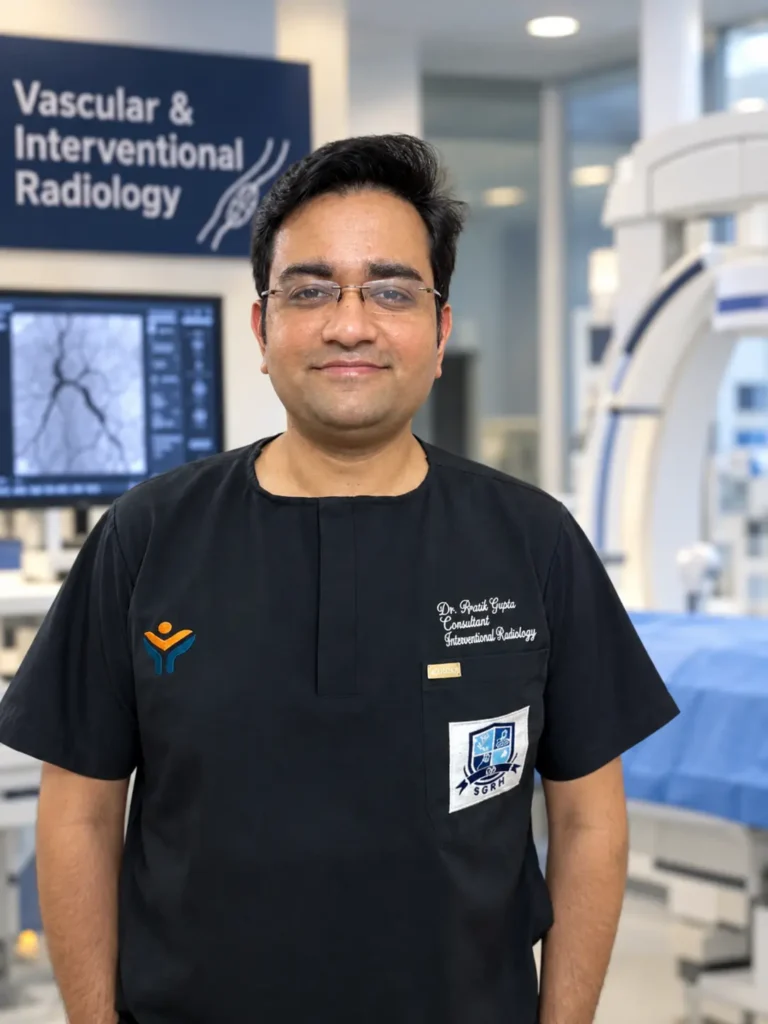
An arteriovenous (AV) fistula is an important lifeline for people undergoing hemodialysis. When it develops a narrowing, blood clot, or reduced blood flow, dialysis may become difficult or ineffective. Timely assessment and appropriate treatment can help restore access function and support ongoing dialysis care.Dr. Anadi Gupta, MD, FVIR, EBIR, Consultant at Sir Ganga Ram Hospital, provides vascular and endovascular treatment options for AV fistula complications, including angioplasty, stenting when appropriate, and thrombectomy.

Dr. Anadi Gupta, MD, FVIR, EBIR

Consultant, Sir Ganga Ram Hospital

AV Fistula Repair

Understanding AV Fistulas for Dialysis

What is an AV fistula?

An arteriovenous fistula is a surgically created connection between an artery and a vein, usually in the arm. It allows a vein to develop sufficient blood flow and size for repeated needle access during hemodialysis.Over time, an AV fistula may develop complications that interfere with effective dialysis. These include narrowing of the blood vessel (stenosis), blood clot formation (thrombosis), or problems with blood flow through the access circuit.When blood flow is reduced, patients may experience difficulty during dialysis, increased pressure in the access, prolonged bleeding after needle removal, or a noticeable change in the fistula.

Key Symptoms

IF YOU NOTICE THESE SIGNS

When Does an AV Fistula Need Medical Attention?

Changes in your dialysis access can indicate a problem. If the fistula stops working, shows reduced vibration, or you have difficulty during dialysis, get it evaluated promptly. Seek urgent care for sudden loss of access, severe pain, or a cold, pale, or numb hand.
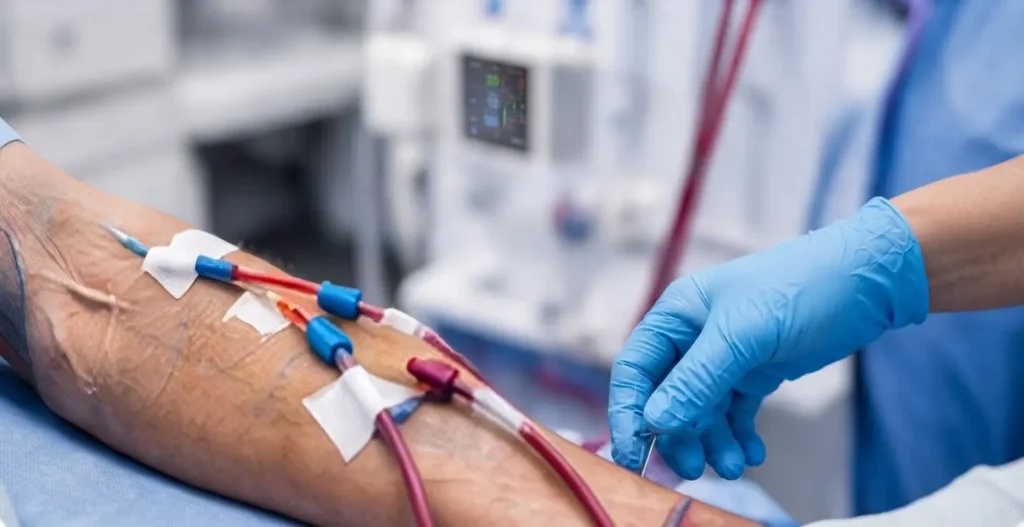
AV Fistula Sign

What is AV fistula repair?

Advanced Treatment to Restore Dialysis Access

AV fistula repair includes procedures used to treat narrowing, blood clots, and other problems that interfere with dialysis access function. The treatment depends on the location and nature of the complication.

AV Fistula Angioplasty

Balloon angioplasty is used to widen a narrowed segment of the fistula or its draining vein. A catheter is guided to the affected area, and a small balloon is inflated under imaging guidance to improve blood flow.

AV Fistula Thrombectomy

If a blood clot blocks the fistula, thrombectomy may be performed to remove the clot and restore circulation. Depending on the case, mechanical devices, aspiration techniques, or other clot-removal methods may be used.

Stenting, When Appropriate

A stent may be considered for selected lesions when additional support is needed or when narrowing persists or recurs. Stent placement is not required in every case and depends on the location of the lesion, future access needs, and available treatment options.

Central Venous Intervention

If narrowing in a central vein contributes to arm swelling or impaired fistula drainage, central venous angioplasty or stenting may be considered after appropriate assessment.

Who may benefit from AV fistula repair?

Is AV Fistula Repair Right for You?

A vascular and endovascular specialist may evaluate patients who have:
  • Narrowing of the AV fistula or its draining vein.
  • Blood clots causing partial or complete access blockage.
  • Reduced blood flow that affects dialysis adequacy.
  • Repeated high venous pressure readings during dialysis.
  • Prolonged bleeding after dialysis needle removal.
  • Arm swelling associated with impaired venous drainage.

How is AV fistula repair performed?

The AV Fistula Repair Process

Clinical Assessment

Dr. Anadi Gupta reviews the patient's dialysis history, access-related symptoms, previous procedures, and any recent difficulties during dialysis.

Diagnostic Evaluation

A clinical examination and Doppler ultrasound may be used to assess blood flow and identify narrowing or clot formation. Fistulography or other imaging may be required to evaluate the access circuit in more detail.

Personalized Treatment Planning

The specialist determines whether angioplasty, thrombectomy, selected stenting, surgical revision, or another approach is appropriate.

Image-Guided Intervention

For angioplasty, a catheter and balloon are guided to the narrowed segment and used to widen the vessel. If a clot is present, an appropriate thrombectomy technique may be used to remove it. Stenting may be considered in selected cases.

Access Function Assessment

The team assesses blood flow through the fistula and checks for any immediate complications. The access may be evaluated to determine whether it is suitable for dialysis use.

Follow-Up and Access Care

Follow-up helps assess access function and identify recurrent narrowing or clotting. Patients should continue monitoring their fistula and follow the care instructions provided by their dialysis team.

  • May restore or improve blood flow through a dysfunctional dialysis fistula.
  • Can help address narrowing or clot formation that interferes with dialysis.
  • May help preserve an existing dialysis access and reduce the need for a new access procedure.
  • Catheter-based approaches may avoid open surgery in selected cases.
  • Can support continuity of dialysis care when access function is successfully restored.
  • Bleeding or bruising at the access site.
  • Injury or rupture of the blood vessel during treatment.
  • Recurrent narrowing or clot formation.
  • Incomplete restoration of blood flow or early access failure.
  • Infection or other access-related complications.
  • Contrast-related reactions or kidney complications in susceptible patients.
  • Stent-related complications when a stent is used.
  • Need for repeat intervention or surgical revision.
1

Why consult Dr. Anadi Gupta?

Specialized Vascular & Endovascular Care

Dr. Anadi Gupta, MD, FVIR, EBIR, is a Consultant at Sir Ganga Ram Hospital with a focus on vascular and endovascular interventions.His areas of practice include AV graft repair through angioplasty, thrombectomy, and stenting when appropriate, as well as AV fistula repair, central venous angioplasty and stenting, DVT thrombectomy, peripheral arterial interventions, and IVC filter insertion and retrieval.

ADVANCED DIALYSIS ACCESS CARE

Experiencing AV Fistula or Dialysis Access Problems?

Get your dialysis access assessed and explore suitable treatment options with Dr. Anadi Gupta, Consultant at Sir Ganga Ram Hospital.

Frequently Asked Questions

AV Fistula Repair

Can a blocked AV fistula be repaired?

In many cases, a blocked or narrowed fistula can be evaluated for treatment using thrombectomy, angioplasty, or another suitable procedure. Success depends on the cause, duration, and severity of the blockage.

Angioplasty is generally a minimally invasive, catheter-based procedure performed under imaging guidance. Some access problems may require surgical revision instead.

A missing or significantly reduced vibration, known as the thrill, may indicate reduced blood flow or clot formation. Contact your dialysis team and seek urgent medical assessment rather than waiting for your next routine session.

Not always. Balloon angioplasty alone may be sufficient for some narrowings. A stent is considered only in selected situations after evaluating the lesion and future access needs.

Yes. Recurrent narrowing and clot formation can occur even after successful treatment. Regular access monitoring and timely evaluation of new symptoms are important.

The timing depends on the procedure, the condition of the fistula, and the treating team's assessment. Your dialysis team will confirm when the access is suitable for use.

Follow your dialysis team's access-care instructions, check the usual vibration daily, and report changes promptly. Avoid pressure or tight clothing over the access arm, and do not allow blood pressure measurements or blood draws from that arm unless your clinical team specifically advises otherwise.