- SIR GANGA RAM HOSPITAL, Old Rajinder Nagar, Rajinder Nagar, Delhi, 110060
- Mon - Sat : 9:00 AM - 6:00 PM


Gallery Posts






An arteriovenous (AV) graft provides access to the bloodstream for people undergoing hemodialysis. When a graft develops narrowing, blood clots, or reduced blood flow, dialysis can become difficult or the access may stop working.Dr. Anadi Gupta, MD, FVIR, EBIR, Consultant at Sir Ganga Ram Hospital, provides evaluation and endovascular treatment options for dialysis access complications, including AV graft angioplasty, thrombectomy, and stenting when appropriate.
Consultant, Sir Ganga Ram Hospital


An arteriovenous graft is a type of vascular access used for hemodialysis. It connects an artery to a vein using a specially designed synthetic tube, usually placed under the skin of the arm. The graft allows repeated needle access so blood can travel to and from the dialysis machine.Over time, an AV graft may develop narrowing, commonly near the vein connection, or become blocked by a blood clot. These complications can reduce blood flow, increase pressure within the access, and interfere with effective dialysis.
Changes in your dialysis access can indicate a problem.Seek medical evaluation if you notice reduced vibration,difficulty during dialysis, prolonged bleeding, arm swelling or if the graft suddenly stops working.

A vascular and endovascular specialist may evaluate patients who have:
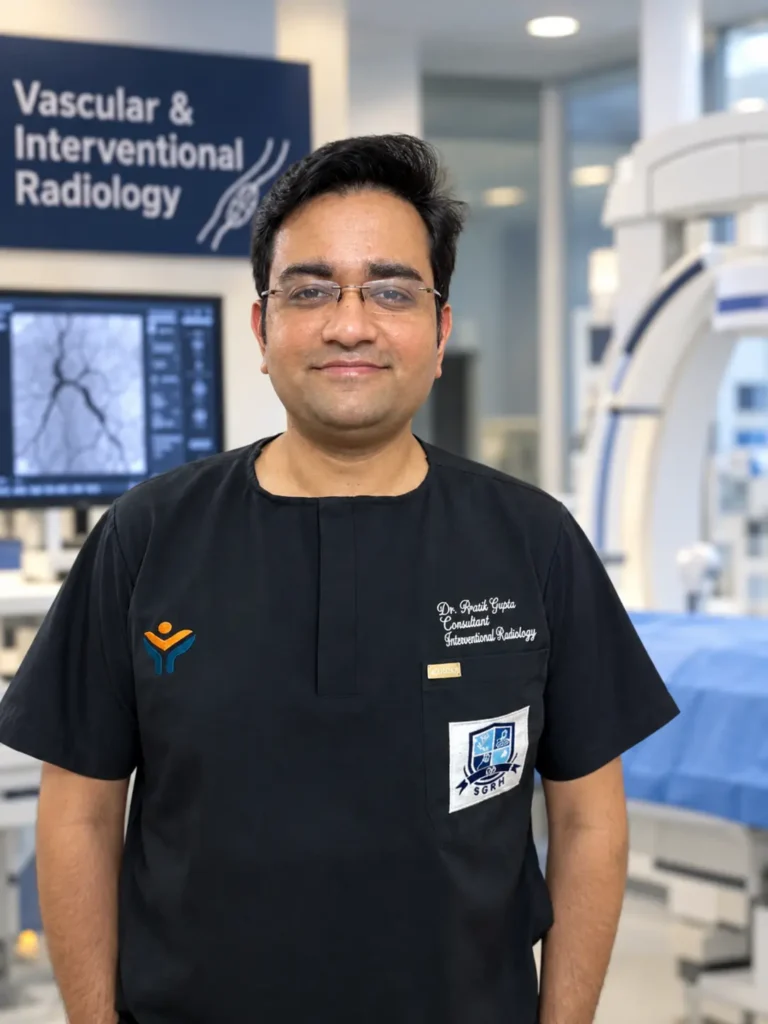
Dr. Anadi Gupta, MD, FVIR, EBIR, is a Consultant at Sir Ganga Ram Hospital with a focus on vascular and endovascular interventions.His areas of practice include AV graft repair through angioplasty, thrombectomy, and stenting when appropriate, as well as AV fistula repair, central venous angioplasty and stenting, DVT thrombectomy, peripheral arterial interventions, and IVC filter insertion and retrieval.
Get your dialysis access assessed and explore suitable treatment options with Dr. Anadi Gupta, Consultant at Sir Ganga Ram Hospital.